

Introduction
An ENS-focused governance interface that surfaces the dynamics behind every proposal — quorum accumulation, daily voting activity, vote-weight density, and delegate-level participation history — alongside the standard browse/vote stack.
Details
The governance frontend void
Tally announced in early 2026 that it was winding down after six years of powering governance for over 500 DAOs. The void this creates is uneven: large protocols can fund custom replacements, but the ecosystem-wide loss is the canonical interface — the place delegates checked proposals, voters reviewed positions, and onlookers got a sense of what was happening.
For ENS specifically, the loss is sharper. ENS has months of forum activity per year, hundreds of delegates, and a governance surface that demands its own attention. A generic frontend that treats ENS as one of five hundred DAOs always undersells the work.
What Dispatch is
Dispatch is an ENS-focused governance frontend. It does the canonical things — proposal browsing, delegate views, vote submission — and then keeps going. Each proposal is a surface for understanding how it became what it is, and each delegate is visible at the granularity of every vote opportunity they've had.
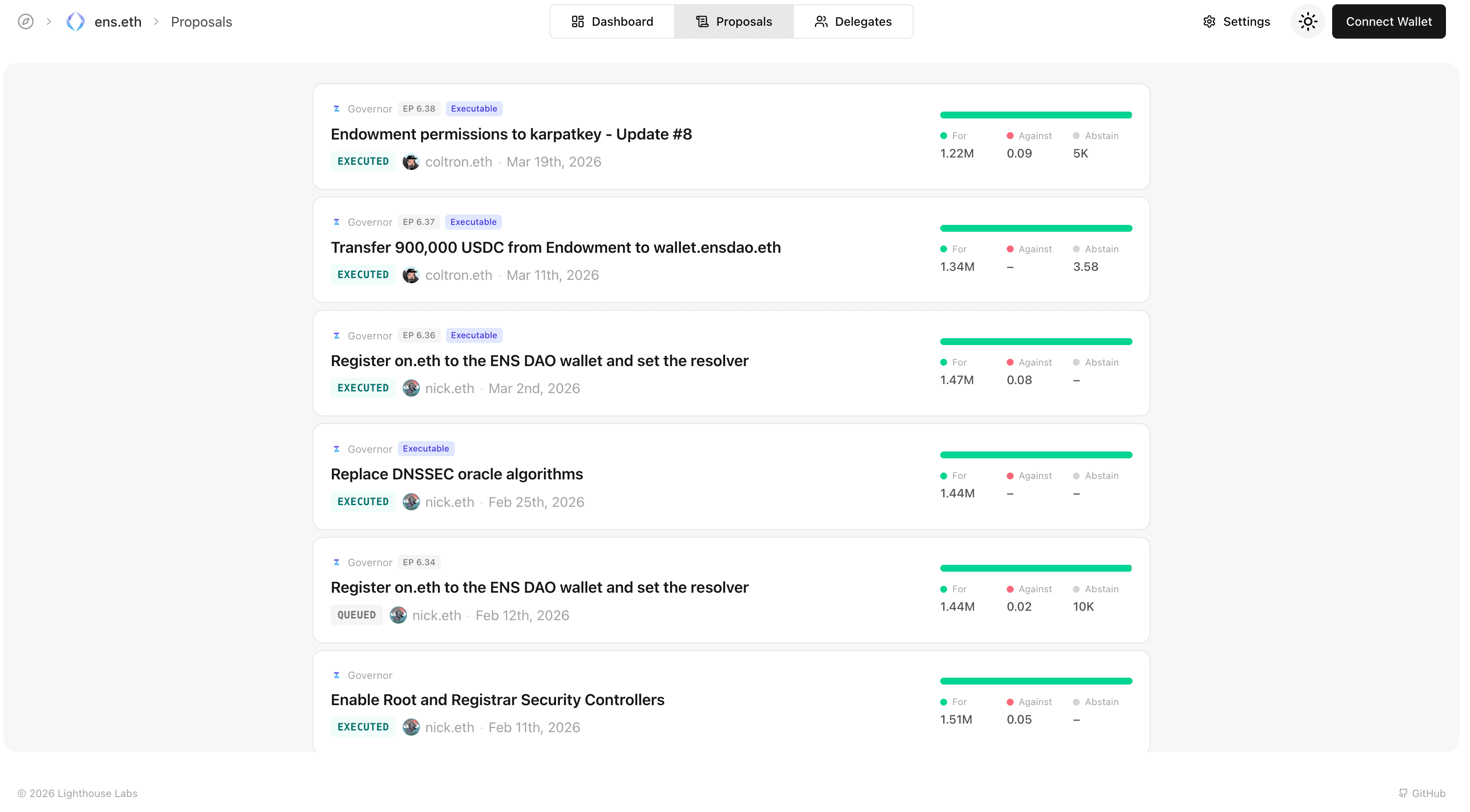
Per-proposal analytics
Each proposal carries three live views — one tabbed panel that cycles between Quorum, Activity, and Density:
- Quorum. How participation accumulated toward the quorum threshold across the voting window. The curve says as much as the outcome — did the proposal cross late or early, smoothly or in steps?
- Activity. Daily voting activity by direction (For / Against / Abstain), rendered as a heatmap across the voting period.
- Density. The shape of vote-weight distribution across participating delegates — a direct read on whether the outcome reflects broad coordination or concentrated voting power.
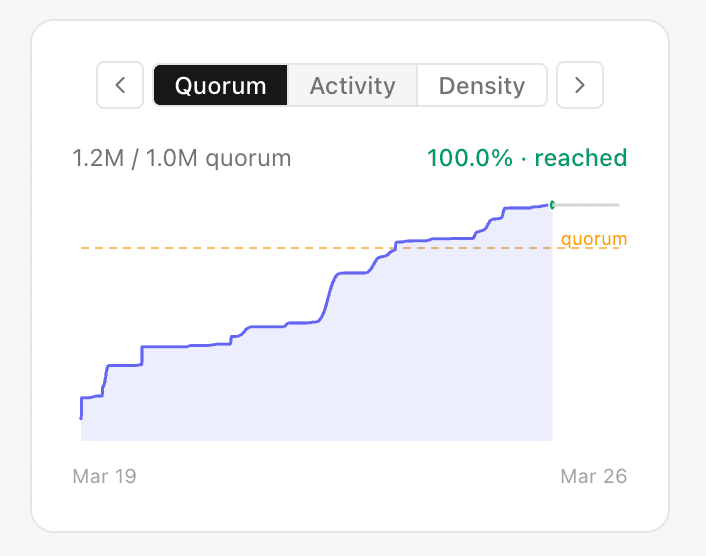
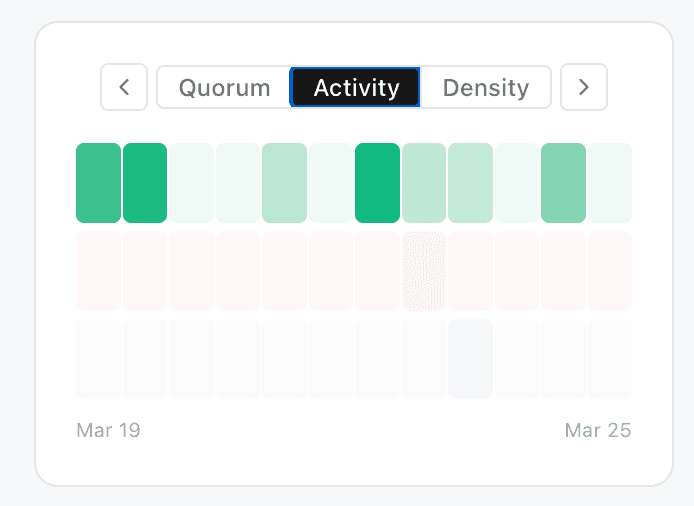
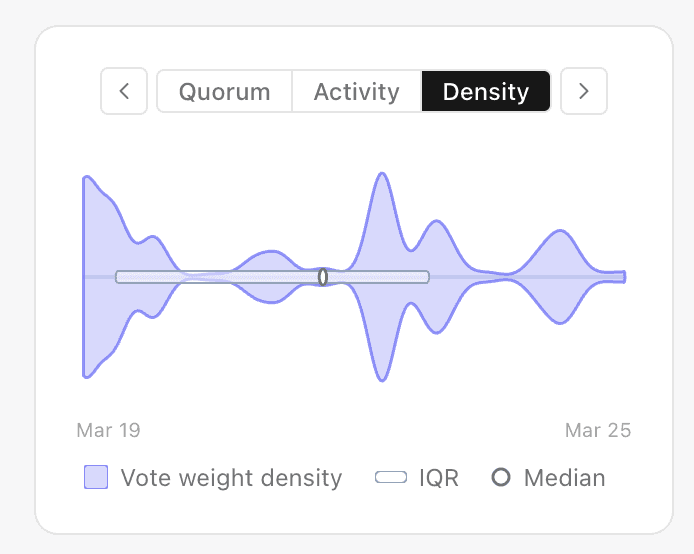
One tabbed panel, three views — Quorum, Activity, and Density — on every proposal.
The density view in particular speaks to a question Lighthouse has been researching from the mechanism side: when a token-weighted vote passes, who is it actually passing on behalf of? Dispatch makes that legible per proposal, not just per dataset.
Delegate accountability
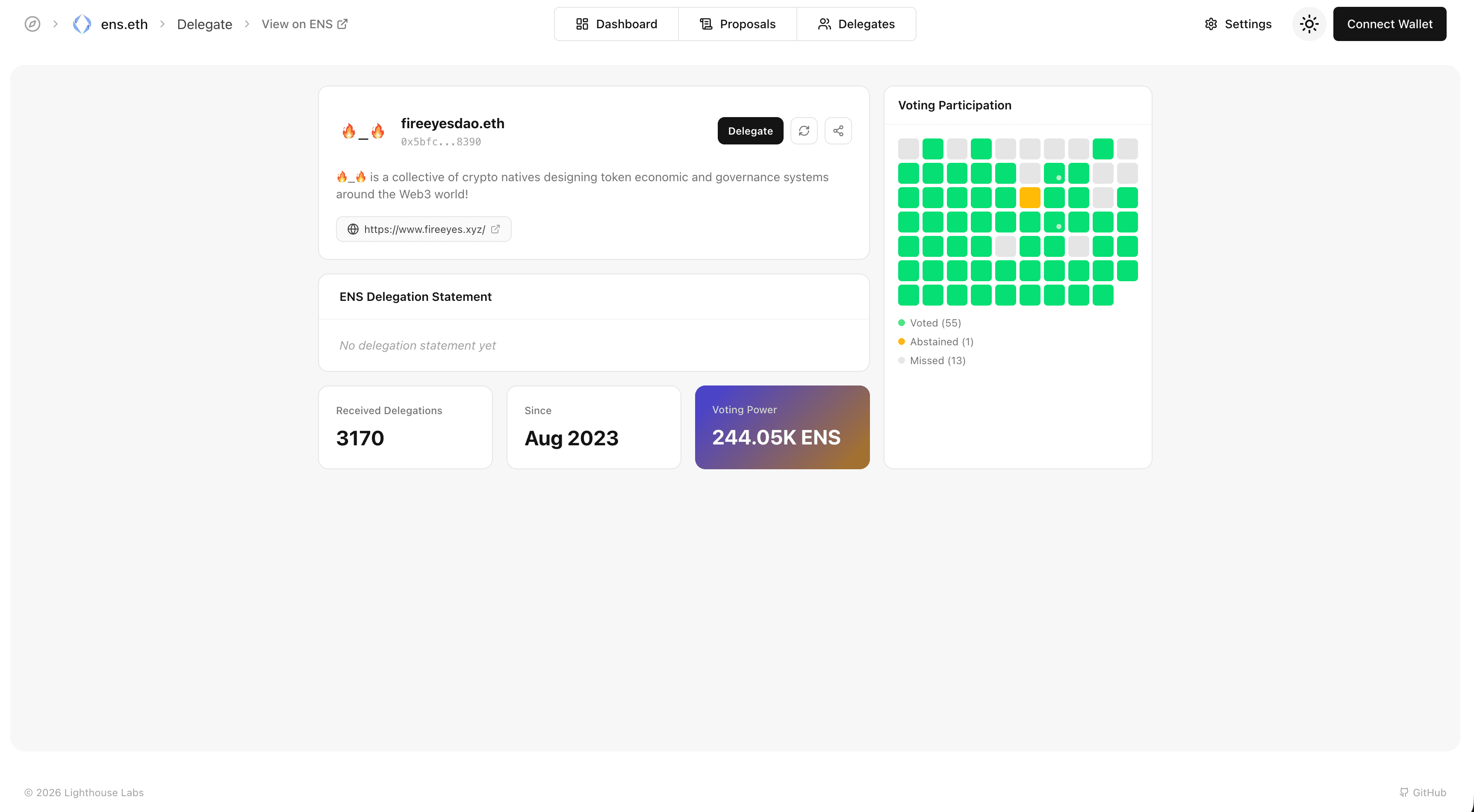
For any delegate, Dispatch shows a calendar-style grid of every vote opportunity since they registered — voted, abstained, or missed — alongside voting power, received delegations, and the date their delegation began. The grid makes participation visible at a glance: a delegate who claims to be active and a delegate who actually shows up are no longer interchangeable.
Status
Live in beta at beta.dao.vote. Built by Lighthouse Labs as part of a broader thesis: governance worth defending requires being visible, and visibility starts with the frontend that delegates and voters actually use.
Topic
Governance InterfacesVoting clients, delegate dashboards, proposal analytics, and mobile surfaces that make governance participation legible and accessible.
Concepts